Sunday, September 26, 2021

Singin' in the Pain

Movies: Annette

So, I was going to include Leos Carax's rock opera, Annette, in with my "Movies I watched in September" blog post, but I realized that this film deserves its own entry.

I watched Annette two days ago and I can't stop thinking about it. I've gone back and rewatched a few scenes, as well as downloaded the soundtrack. It's a film that is mesmerizing and strange, at times cringey and at other times absolutely gut-wrenching.

The film, as well as the music, was written by Ron and Russell Mael, who are also known as the musical duo Sparks. Sparks is having a hell of a year--in addition to releasing Annette in 2021, they were also the subject of a documentary by filmmaker Edgar Wright (Shaun of the Dead, Baby Driver). Indeed, the soundtrack to Annette is one of its strongest features.

Another strong feature of the film is the acting. Adam Driver who just cannot stop being so fucking talented plays Henry McHenry, a comedian who falls in love with Ann Defransnoux (Marion Cotillard), an opera singer. Rounding out the cast is Simon Helberg (best know for his role as Howard Wolowitz in The Big Bang Theory) who plays a character named only "The Accompanist", who is a musical accompanist for Ann and is also in love with her. 

Ann and Henry's relationship is an opposite-attracts one, which they sing about in "We Love Each Other So Much", which is both my favorite song in the movie and also my favorite sequence in the film. For those of you who pay attention to movie news and/or are Adam Driver stans, like myself, this is the part of the movie where Driver sings while performing cunnilingus. Well, I mean, technically he lifts his head to sing a line...he doesn't actually sing into Marion Cotillard's pussy. 

The problem is...Henry isn't a nice guy. He is aggressive, volatile, an alcoholic, and physically dominating. There's a scene immediately after the infamous cunt-singing scene where Henry holds Ann down and aggressively tickles her. Even though the implication is that it's consensual, it's an interesting contrast to the previous scene because it shows how easily such fun and games could slip into non-consent given Henry's size and unstable personality. 

We don't see just how volatile Henry is until later, after the couple has a child, Annette (played by a marionette, which only adds to the dreamlike and bizarre quality of the film) and Ann gains international fame while Henry's career starts to fizzle out. He becomes resentful for having to "babysit" Annette (YOU'RE THE DAD, MY DUDE) while Ann travels the world, singing to an adoring audience. Henry hits the bottle more and more often, and eventually has a breakdown during one of his performances where he claims he killed his wife by "tickling her to death", and then pantomimes this event. It's a hell of scene for Driver and, I can't believe I'm saying this, but it's almost Shakespearean--just this intense, bizarre, funny-but-not-funny monologue that has the audience booing him off the stage by the end of it. I love it when an actor is willing to just be a combination of nuts and vulnerable. Sorry, I'm trying to not let my horniness for Driver effect this review, but uh, it's my blog and I'm going to be horny if I want to be.

Well, he doesn't actually kill Ann by tickling her to death....but, uh....spoilers spoilers spoilers...

...

...

...

SPOILER SECTION

The couple take a trip on their yacht to heal their relationship, but during a storm, Henry forces Ann to dance with him while he is blind drunk. She falls overboard and dies. After her death, Henry discovers that baby Annette can sing in Ann's voice. Knowing that his career is over, Henry immediately ropes the Accompanist into his scheme to exploit baby Annette's talent for commercial gain. The Accompanist makes a great contrast to Henry: he is short where Henry is tall, patient where Henry is impatient, and gentle where Henry is rough. I'm really happy to see Helberg getting interesting roles, post-TBBT because he is one hell of a talented dude, both in terms of acting and singing. His character, the Accompanist, was in love with Ann and also suspects that he might be the actual father of Annette, so even though he finds Henry loathsome, he is willing to become involved for Annette's sake.

Well, it's only a matter of time before Henry on-purpose drowns the Accompanist, an act which Annette reveals to the entire world during a performance. The final scene is Henry in prison and Annette--no longer played by a puppet, but a little girl--telling him that he can't love her, "not really". It's a devastating ending which nearly had me in tears. 

END SPOILERS

...

...

...

You might be wondering why the hell you'd want to watch a movie about a shitty, resentful dude who throws away all the gifts he was given in life and then refuses to take responsibility for his actions. But remember that this is a rock opera, and operas are meant to be over-the-top and, often, incredibly tragic. If Annette were an indie drama, it would indeed probably be a pretty annoying film. But the medium allows it to turn the emotions up to 11, embrace concepts like star-crossed lovers, and pile tragedy upon tragedy--it's an opera for God's sake! You want your operas to feel like TOO MUCH.

Annette is the kind of movie where you'll read about it and either think "yeah, no fucking way I'm watching that" or "hell yes, this is right up my alley". From reviews I've read, people either think it's the most ridiculous, embarrassing movie of the year or the best movie of the year. I'm not quite willing to label it "best of the year", but I will say that it really hit me hard and I think I will be thinking about it and listening to the music for quite a while. So if you're on the fence, I'd highly recommend checking it out--and be prepared to have some strong opinions about it!

Grade: A- 

At the very least, watch the opening sequence, which slaps:


Wednesday, September 8, 2021

Sweets to the Sweet

 Movies: Candyman (1992) and Candyman (2021)

I am the writing on the wall. The sweet smell of blood. Be my victim.

***

Ok, so I watched Bernard Rose's 1992 Candyman sometime in 2020 or 2019, but I can't for the life of me find a review of it on this blog. Which is odd because it made a huge impact on me. So I apologize if I did review it and it's buried somewhere.

In any case, I figured this would be a great opportunity to do a double-review with Nia DaCosta's 2021 Candyman, which is being referred to as a "spiritual sequel" even though it's...a straight up sequel. I had been waiting over a year to see DaCosta's Candyman and I was not disappointed! It is not a flawless film, and neither is Rose's. When I compare the two side by side, each one has unique strengths and weaknesses. But they are undoubtedly both excellent, powerful horror films with one hell of a villain.

Rose's 1992 film is based on a short story by Clive Barker titled "The Forbidden". But what's truly fascinating is how Rose uses Barker's story, but also some real-life shit that went down in the Cabrini-Green projects in Chicago in 1987, as inspiration. Specifically, an incident where a woman, Ruthie Mae McCoy, was murdered by a man who literally came through her bathroom mirror. Read the story here. Ruthie's story is explicitly referenced in the 1992 Candyman and one of the characters, Anne-Marie McCoy (played by Vanessa A. Williams, who also has a role in the 2021 film playing the same character) is named after the real-life murder victim. The fact that Candyman weaves this true story into the overarching fictional plot is brilliant, given that the film is about an urban legend, and urban legends are often a blend of fiction and facts. 

Virginia Madsen plays Helen Lyle, a graduate student working on her thesis with fellow student and friend Bernadette (Kasi Lemmons, who went on to direct films herself). The thesis is on urban legends and so, living in Chicago, Helen naturally learns of Candyman, a story originating from the Cabrini-Green projects. The story of Candyman is that he was the son of a former slave who was a well-educated and talented artist. He ended up falling in love with the daughter of a wealthy white man after being commissioned to paint her portrait. After discovering that his daughter was pregnant, the wealthy man had a mob brutalize Candyman (real name: Daniel Robitaille) by sawing his right hand off, sticking a hook into the stump, slathering him with honey, and letting thousands of bees sting him to death. This torture and murder took place the area that would become Cabrini-Green. 

Helen's search for the truth of Candyman shows how urban legends spread: she talks to a single mom who lives in the Cabrini-Green projects, Anne-Marie McCoy, who tells her about how Candyman came through her neighbor Ruthie Jean's bathroom mirror and sliced her to death. Later, a young boy, Jake, shows Helen a public restroom and says that he heard that Candyman lives there...and Helen has a run in with some gang members who tell her she "found Candyman" while they beat the crap out of her. Not to mention the fact that she actually, you know, summons Candyman for real. The mixture of rumor, ghost story, and the simple horrors of poverty and violence blend into a sad, beautiful, and violent story about race, class, and how people mentally process the unfairness and brutality of life.

My main issue with the 1992 Candyman is that it tells a story of Black pain through the eyes of a white woman. It's not so much that the film is racist, it's just that by focusing on Helen Lyle, the film relegates Black suffering to the background. There are many wonderful, interesting characters of color in this film: the vulnerable, protective Anne-Marie McCoy, the skeptical, level-headed Bernadette, and the man himself--Candyman, played by the elegant and very sexy Tony Todd--but they are all just supporting characters in Helen's story. 

However, if we're willing to accept that Candyman is what it is: a product of its times, and a product of a white-centered society, it is a truly unique, even beautiful story. I keep saying "beautiful" because the story of Candyman is a story of forbidden love which transforms into a story of brutality and revenge. There's something unique about Candyman himself. He is indeed a villain, and he murders without hesitation, but he's closer to a Hannibal Lecter than a Freddy or Jason: Candyman is elegant, intelligent, driven by a desire to reclaim the love he lost and take revenge on those who do not fear him enough to leave well enough along and avoid saying his name five times into a mirror. He's not a mindless psychopath, but a poet, an artist. He's also very clearly a Clive Barker creation in the way he mixes pain and pleasure, beckoning Helen to "be my victim" and promising her "the pain will be exquisite" There is indeed a touch of the ol' sadomasochism in the heart of this bee-ridden ghost. 


Bee my victim.

Now, Nia DaCosta's Candyman takes the legend and expands on it. In this story, there are Candymen, if you will: men who have suffered at the hands of white people over the decades. The film opens in Cabrini-Green in 1977. Young William is doing his laundry when an older gentleman, with a hook for a hand, steps through a hole in the wall and offers William a piece of candy. William screams, alerting police officers who beat the man to death. This man is Sherman Fields, a harmless old man who is disabled and mentally not all there, but is beaten to death all the same. 

Cut to present day. Anthony McCoy (Yahya Mateen-Abdul II) is a visual artist living in a gentrified area of Chicago. In his quest for artistic inspiration, he comes upon the story of Candyman. Not unlike Helen Lyle, Anthony learns about Candyman by wandering through Cabrini-Green taking photos. William Burke (Colman Domingo), the owner of a laundromat and, yes, the same William whose scream inadvertently led to Sherman Fields' death, tells Anthony what he knows of Candyman--and Anthony is inspired to create a piece of artwork that involves a mirror. The piece is titled "say his name" (which is a not so subtle, but still powerful, reference to the victims of police brutality) and Anthony's girlfriend, Brianna (Teyonah Parris), displays it in an art gallery she runs. Of course, later that night, the gallery owner and the piece of tail he happens to be fucking that evening summon Candyman in Anthony's mirror and are found brutally murdered in a puddle of blood the next morning. 

In DaCosta's Candyman, the murderous ghost is mostly played by Michael Hargrove (who also plays Sherman Fields), until the very end when we see a glimpse of Tony Todd behind a face-full of bees (the crowd in the theatre cheered at this). This is fitting, as William Burke explains to Anthony, "Candyman ain't a "he"; Candyman's the whole damn hive". DaCosta makes what was subtle in the 1992 film much more explicit in this film: the lore around Candyman isn't so much about one scary ghost...it's about how people process the unthinkable. Burke reveals to Anthony a whole history, starting with Daniel Robitaille in the 1890s, of white people brutalizing and murdering Black people on Black people's own turf (i.e. Cabrini-Green). From the mob that slathered Robitaille in honey to the cops who beat Fields to death, Candyman is not a singular entity, but a symbol of Black suffering transformed into Black vengeance.

Indeed, this Candyman (with one exception) only kills white people. The movie aficionado Facebook group I'm in had some questions about this; namely: does DaCosta stick to the lore created in the Rose version? Well...sort of! Candyman's MAIN motivation for killing is two-fold: to punish those who summon him for not "being content with the stories". Basically, if they believed strongly enough, they wouldn't summon him. In doing so, they prove their disbelief and must be punished. Secondly, Candyman kills so that his story lives on. Each kill means more rumors and more fear. And Candyman's greatest desire is to be remembered. His final line in the 2021 film is "Tell everyone." So, in the original, Helen Lyle summons him, but he doesn't kill her right away--instead, he wants her to sacrifice herself to him so they can be together in eternity (Helen apparently reminds Candyman of his lost love, the white woman he was murdered over). There is a touch of Bram Stoker's Dracula here with the whole "I have crossed oceans of time to find you" thing, which makes sense, given that Candyman is supposed to be a Black Dracula of sorts: he is debonair, handsome, and has the ability to hypnotize his victims, making them desire their own demise. 

Likewise, in the 2021 version, Anthony summons Candyman and isn't killed immediately, unlike the gallery owner and, hilariously, a bunch of white teen girls who summon him in a high school bathroom. Instead, Candyman begins inhabiting Anthony, leading to a scene of pretty intense grossness--stay away from this film if you suffer from trypophobia. While Candyman wanted Helen as an eternal lover, he wants to possess and embody Anthony,

Detail-oriented readers might also notice that Anthony's last name is McCoy. And in the 1992 version, single mom Anne-Marie McCoy nearly lost her baby boy when Candyman (or Helen, depending on your interpretation), stole him and put him in a bonfire to be burned to death, only to be saved by Helen, who dies in the process of saving the baby. 

So, anyone familiar with the first film will quickly figure out that grown man Anthony McCoy was that little baby. And Candyman's possession of him is a way for the ghost to reclaim what is his. In doing so, Anthony is added to the lineage of Black men who embody Candyman...and the legend continues. 

My biggest criticism with DaCosta's Candyman is that there are just too many ideas crammed into a 90 minute film. There is an entire subplot about Brianna's father, an artist who took his own life, that is brought up multiple times but goes nowhere. There is also a lot left unsaid about gentrification, art, police brutality, and more. I would be very interested to see a director's cut of this movie, if one exists. The film's insides are bigger than its outsides, if that makes sense.

The 1992 film and the 2021 film make great companion pieces, not unlike Magic Mike and Magic Mike XXL. They both have their strengths and weakness, and they both add to the lore of Candyman. I highly recommend both films.

Grades:

Candyman 1992: A

Candyman 2021: B+


Monday, August 30, 2021

Movies I watched in...August 2021

 The Night House

If you want to watch a movie that will scare you shitless, The Night House (especially seen in a threatre) is your movie. Following a newly widowed woman, Beth (Rebecca Hall, whom I will rave about below), The Night House is a horror film about grief, depression, and coming to terms with the secrets our closest loved ones keep from us.

The very night of her husband's funeral, Beth starts hearing things in her house at night. She also begins having incredibly realistic--and disturbing--dreams. Beth is a hardcore skeptic, but clearly something is going on. So she begins to look through Owen's laptop and workshop (he was an architect who built the lake house they lived in...that Beth must live in alone now). She discovers some unnerving things, such as a floor plan for a house identical to theirs, but the floor plan is backwards, and images of dark-haired women who look very similar to her in Owen's phone.

The dreams begin to get real weird: one night Beth dreams that she find the reverse-house across the lake and sees her husband with another woman in it. The next day, she treks through the woods...only to discover that, indeed, Owen WAS building a house. It's incomplete and spooky as fuck, made only spookier by the discovery of a voodoo doll-type thing in it. The film teases us: was Owen having an affair? Was he killing these women? Is he now a ghost, haunting his wife and driving her to the edge of insanity? You'll have to watch to find out!

Although I felt there was something lacking in the conclusion of the film, I have to give The Night House two things: 1) it scared the crap out of me, making me jump and watch through my hands for half the film and 2) Rebecca Hall takes what could be a very average role and elevates it. Hall is a very intelligent and gifted actor, and she makes full use of her withering glare and pithy insults in this film. Her portrayal of a woman in grieving was so very, very honest: she hides her deep hurt and loneliness with irreverence and "jokes" that come off as mean. But that's what a lot of people in grieving do--they lash out, they make jokes to hide the pain (even hiding it from themselves), and they do crazy shit. Hall single-handedly takes what could have been a mediocre haunted house movie and elevates in to a meditation on grief and existentialism.

Grade: B+

***

Pray Away

This documentary, directed by Kristine Stolakis, follows former leaders of Exodus, a ministry focused on conversion therapy. The majority of the people in the film left Exodus and are now fully out as gay or bisexual. If you grew up in or around fundamentalist Christianity, you might be familiar with such names as Randy Thomas and John Paulk, who were huge figures in the so-called "ex-gay" community. These individuals engaged in religious "therapies" meant to root out the "reasons" they were gay, confront those reasons, and get back on the God-approved path of being straight. Many of them lived lies, including getting married to a spouse of the opposite sex and having children, for decades before the truth caught up with them. Even though the were acting straight, deep inside they were still gay.

Pray Away is a solid and harrowing documentary. It is important to show that people CAN change (and by "change" I mean...leave the church and live their actual truth, not the false truth the church wanted them to live) and they can get out of the cult mentality of fundamentalist religion. However, the film has received backlash since it focuses on people who, although victims of the larger culture themselves, victimized many, many others. One reviewer pointed out that as a queer person who grew up facing hostility in her religious community, it was hurtful to see the very people who allowed such hostility to flourish living their best lives now. While I understand why the film focused on the leaders of this "movement" (seeing the most rabid believers turn away from their previous beliefs is undeniably interesting), I can imagine and understand the bitterness of queer people raised in the church seeing the faces of the movement that tormented them get to say their piece and explain themselves.

For me, a heterosexual person who was indirectly influenced by conservative teachings about homosexuality (essentially, such teachings lead me to reject dogmatic religion), Pray Away just reminded me of how much I truly despise people like Jerry Falwell, James Dobson, and other leaders of the 80s-90s era fundamentalist Christian culture who profited off the suffering of so many people. Like many people, I have extended family members who still believe bullshit like this and it means I can't have a close relationship with them because their "values" are sickening to me (and, quite likely, my opinions of sexuality are sickening to them). 

It's not just Christianity--there are other religions, including Islam, that consider homosexuality to be sinful. But Christianity is what I grew up with, and is the dominant religion in the United States. So I'm more comfortable shitting on Christianity than a religion I have no connection to and much less knowledge of. In any case, I do recommend Pray Away despite its imperfections. Although some people will feel hurt that the leaders of a ministry that harmed many people get a chance to explain themselves and are living happier lives, I do think seeing them publicly reckon with the damage they caused and admit that their sexuality was not a sin and was never wrong will help a great many others. 

Grade: B

***

Southland Tales

Southland Tales is Richard Kelly's follow-up to his masterpiece, Donnie Darko. And it is a hot mess. The film is a genuine work of passion, but it is overly long, rarely makes sense, is nearly impossible to follow, and is just plain bizarre.

So Kelly apparently wrote three comic books that take place in America in the not-too-distant future. The dropping of nuclear bombs on El Paso and Abilene, Texas lead America into World War III. This leads to the return of the draft, a fuel shortage, and mass surveillance of United States citizens. The government is heavily Republican, so groups of Neo-Marxists start cropping up and committing acts of terrorism against the government. Southland Tales opens on "Chapter 4". So basically, you're supposed to read the comics first and then see the movie. But most people don't even know the movie exists, let alone the comics.

The main plot revolves around the disappearance and reappearance of Boxer Santaros (Dwayne Johnson), the son-in-law of a powerful Republican senator. Santaros disappeared in the desert and then reappeared, but now has amnesia. He crosses paths with Krysta Now (Sarah Michelle Gellar), an ex-porn star. The two start a romantic relationship and write a script called "Southland Tales" which takes place in the not-too-distant future. Only it so happens that their script actually predicts the actual future. Because when Santaros disappeared, it was actually a rip in the time-space continuum, so the Santaros who reappeared was his future self who, of course, knows what happens in the future.

Confused yet? I sure was! It's funny because the Wikipedia synopsis of Southland Tales is surprisingly short, despite the film's many layers and complexities. I think it's because whoever wrote it was like "gahhhh, fuck this!" and couldn't deal with writing a detailed synopsis. That said, Southland Tales is just so fucking unique and so clearly a passion project for Kelly that I can't bear to give it the grade it "technically" deserves (a D). I'm going to bump it up a whole letter grade for a few reasons: 1) it has some genuinely funny, and genuinely moving moments; 2) Dwayne Johnson is actually pretty good in it, or at least very fun to watch; 3) you can see Kelly's vision underneath the layers of insanity--this film is a mess, but at least it's authentic and earnest.

I really hope that Kelly has another good movie in him. Donnie Darko, while certainly not a perfect film, is fucking great and truly holds up as a cult midnight movie. Kelly has talent...but whether or not he will learn how to refine that talent into a intelligible film...only time will tell. 

Grade: C

***

V/H/S

I was very surprised to find that I did not like V/H/S. Like, at all. Shit, I'm giving it a lower score than Southland Tales, which is an objectively bad film. But V/H/S was VERY boring and a huge disappointment. 

This found footage horror anthology horror film came out in 2012 and contains five short scary movies within a frame story. The directors of these short stories are all top-notch talent: David Bruckner (who directed The Night House [see above] as well as The Ritual), Ti West (The Innkeepers, House of the Devil), Joe Swanberg (better known for his acting work, but he has directed some good films, including Drinking Buddies), Adam Wingard (You're Next, The Guest) and Radio Silence (a team of three directors who most recently directed the excellent Ready or Not). 

I think the fact that the movie was so chock-full of talent is why it was such a disappointment to me. I was genuinely bored during the entire movie. I was not scared, like, at all. Horror anthologies are tricky and I would say that, in general, I don't care for them (although I love scary short stories). Perhaps that's because what I love about horror movies is that build-up of suspense. Short horror films are like the hitachi vibrator of movies: you blow your wad so quickly you can't even enjoy it. But that's not a great analogy because there was nothing even remotely orgasmic about this film.

I feel like V/H/S is a basically a classic at this point, especially in the found footage sub-genre, but I can't recommend it. You're better off seeking out the feature-length films of any one of its directors than you are wasting time and/or money on this sad, boring anthology.

Grade: D

***

The White Lotus

Created by Mike White, The White Lotus is an acidic, well-written show that both criticizes the self-absorbed nature of rich, white people...while ironically falling prey to the "white gaze" itself. 

The show takes place at the titular resort in Hawai'i, run by the incredibly charming Armond (Murray Bartlett, excellent here). Armond welcomes a new crop of guests: a family traveling with their two kids plus the daughter's friend, a newlywed couple, and a single woman traveling on her own. All of the guests, barring the daughter's friend, are very, very wealthy white people. The White Lotus shows how rich, white people use and abuse the people whose job it is to serve them, and leave a trail of destruction in their wake all while truly believing they are good people who earned their success in life.

The acting on this show is INCREDIBLE. Jake Lacy and Alexandra Daddario play the newly married couple, Shane and Rachel Patton. Jake Lacy risks us all hating him by playing an absolute entitled asshole who, upon finding that he and Rachel are not in the room his mother booked for them, makes it his mission to make Armond as miserable as humanly possible. 

Jennifer Coolidge leans into type by playing an alcoholic, aging woman who has come to the island to lay her mother's ashes to rest in the ocean. Along the way, she forms a connection with the spa manager, Belinda (Nastasha Rothwell), a Black woman who is so used to performing emotional labor for the guests of the resort, it is second nature to her--at her own peril.

The Mossbacher family consists of mom Nicole (Connie Britton, just so fucking good here), the CFO of a search engine and all-around type A girlboss; dad Mark (Steve Zahn, a wonderful surprise), who is desperate to regain some of the masculinity he felt he has surrendered in life, especially in regards to feeling having the respect of his wife and son; daughter Olivia (Sydney Sweeney) and her friend Paula (Brittany O'Grady) who are sophomores in college and are at that point in life where they love to lecture adults about the dangers of neoliberalism while refusing to look at their own flaws; and son Quinn (Fred Hechinger), a 16 year old on the autism spectrum who is one of the only decent people on the show. 

On a technical level, the show is brilliant: the writing, acting, and cinematography are all top-notch. The only problem is that in telling us this story, The White Lotus doesn't add much to the conversation about class and race in America. In fact, two of the characters of color come off as foolish and gullible despite the fact that in real life they almost certainly would not be as naive as they are portrayed in the show. When Tanya suggests to Belinda that she would be willing to fund Belinda starting her own wellness resort, Belinda believes it and goes so far as to write up a business proposal. I'm sorry Mike White, but you're a fucking idiot if you actually think a character like Belinda, who is explicitly written to be very intelligent, intuitive, and self-aware, would take Tanya, a self-described "alcoholic lunatic", seriously. There's just no fucking way, and this subplot actually reveals Mike White's white-blindness, so to speak. The other character is Kai, a native islander who starts a relationship with Paula. When Paula suggests a truly harebrained scheme for Kai to "take back" what was stolen from his people by the government, he actually goes along with it, and ends up paying dearly for his mistake. I could *kind of* see Kai making this very foolish choice because he's young and because he trusts Paula (a person of color herself), but both Kai and Belinda losing their common sense seems a bit insulting.

So, the show's strengths mirror its weaknesses: in portraying the destruction white/rich entitlement and white/rich self-absorption causes, Mike White falls prey to his OWN white self-absorption by writing the very few characters of color to be naive and helpless victims to the white characters. It's a very good show, and I do recommend it, but if you're looking for a show that says something brave, insightful, and/or unique about race and class, you won't find it at The White Lotus.

Grade: A-

Sunday, August 8, 2021

Movies I watched in...July 2021

Zola

Zola is the first movie I saw in a movie theatre since 2020's Emma! And while it's not a film that *needs* to be seen on a big screen, it was a good movie to welcome me back to theatres (for now). 

Based on a epic Twitter thread that became a Rolling Stone investigative journalism piece, Zola is "mostly" based on a true story. Please note that I have not read the Twitter thread nor the Rolling Stone piece, but my friend told me that all but one scene in the movie are, for all intents and purposes, accurate to how it went down IRL.

Aziah "Zola" King (played by Taylour Paige, master of the stink eye) is a Detroit waitress who occasionally strips for some extra dough. She meets Stefani (Riley Keogh, always a delight) while serving her one day and the two fall into deep girl-love. Stefani is...not a person I would want to be acquainted with. She's a white girl who basically appropriates Black culture in so many ways, from having her hair in dreads to her use of AAVE. But Zola develops a girl crush on her, and when Stefani invites Zola on a road trip (or "hoe trip") to Florida to go to a strip club where they can earn thousands in one night, Zola agrees immediately, even though she barely knows the woman.

Along for the ride is Stefani's pathetic and very stupid boyfriend, Derrick (Nicolaus Braun, in what we would call a "vanity-free role") and Stef's supposed roommate, whom we don't learn the name of until halfway through the movie (Colman Domingo, just absolutely terrifying and fantastic). Turns out, the "roommate" is actually a pimp and after the two ladies spend the evening stripping, he puts their picture on Backpage.com and books a hotel room for them to provide their, ahem, "services" to any man who shows up.

This was when I realized, shit, Zola might be a horror movie! Any woman watching this film will probably experience that queasy feeling of thinking it's not a matter of if, but when someone will experience assault. However, Zola holds her own in this situation and serves as Stef's handler--she refuses to fuck the men who show up, but she helps Stef increase her asking price and also does things like help remake the bed after each man. 

There's much more to the story, which is an absolute roller coaster ride, but that's basically the gist: road trip goes horribly awry and Zola realizes that Stefani sold her out. But don't worry...this is a dark comedy, and Zola, despite being put in multiple terrifying situations, manages to hold her own and, obviously, survives to tell the tale.

Grade: B+

***

Old

This was the second movie I saw in theatres since 2020! Look, it's an M. Night Shyamalan movie so you know what you're going to get: a fascinating concept, terrible dialogue, surprisingly talented actors slumming it, and ableism! Old has all the M. Night tropes: precocious children who talk like adults, a mentally ill man who turns out to be violent, and a pretty high-concept twist (that you can guess at, given some clues at the beginning of the film). Is it a "good" movie? Not really. Is it entertaining? Yes!

A family of four arrive at a tropical resort. Mom Prisca (Vicky Krieps) and Dad Guy (Gael Garcia Bernal) are planning to divorce and are treating this family vacation as one last hurrah for their kids, 11 year old Maddox and 6 year old Trent. 

The director of the resort tells their family about a secret, secluded beach and they agree that it would be fun to spend the day there. So they head out with another family, younger trophy wife and mom Chrystal (Abbey Lee), older, asshole surgeon dad Charles (Rufus Sewell), their 6 year old daughter Kara, Charles' mother, and their dog. Additionally, another couple, Patricia and Jarin (Nikki Amuka-Bird and Ken Leung) and famous rapper who goes by the name "Mid-Sized Sedan"* (Aaron Pierre) are also on the beach. 

If you saw the preview, you know the main "twist", which is that this beach causes people to age rapidly. At one point, they calculate the aging process to be two years per hour. They sort of figure this out in bits and spurts, such as when Charles' mother, as well as Charles and Chrystal's dog, die within a couple hours. And then Prisca finds that her children look like teenagers all of a sudden. 

Clearly, the resort is "in on it", because they provided each family with HUGE picnic baskets filled with tons of food, knowing that the three children will need to eat constantly while they grow since they are increasing in mass very rapidly. But why? Why would the resort drop them in a place that will kill them in one day's time? And they can't leave because any attempts to walk back the way they came makes them get dizzy and pass out. 

Old is wild and entertaining. We get to see the consequences of rapid aging in some pretty nutty scenes including an attempt at surgery where the wound keeps closing up every time the surgeon makes a cut, as well as two "children" developing into teens who play doctor a little too intensely and end up, you guessed it, making a baby. 

This movie isn't going to win any awards, but it was a fun popcorn movie. Although, seriously, Shyamalan needs to get his shit together and stop being ableist. This is like the fourth movie of his where mental illness is treated as something scary and people with it as violent. I wouldn't blame anyone who wanted to skip it because of those reasons, or just simply don't want to pay premium theatre prices to watch it. But I had a good time, though I doubt I will be revisiting this movie.

*Fuck you, M. Night, you fucking dork.

Grade: B

***

The Sound of Metal

Damn. Every once in a while you see a movie that just blows your socks off. The Sound of Metal is such a film. Starring the wildly talented Riz Ahmed as a drummer in a two-person metal band who begins to lose his hearing, The Sound of Metal tackles some heavy, philosophical topics.

Ahmed plays Reuben. Reuben and his girlfriend, Lou (Olivia Cooke) are in a metal band and they drive around the USA in their RV performing gigs. Over the course of just a couple days, Reuben realizes he can't really hear anymore: it sounds like he's underwater. A visit to the doctor reveals that he only has something like 28% of his original hearing capacity left. The doctor advises him to stop playing music to preserve what little hearing he has left. But Reuben is in complete denial. 

Additionally, Reuben is a recovering drug addict. Reuben's sponsor hooks him up with a community of deaf sober people, where they combine the principles of sober living with the principles of living in a deaf community. Basically: deafness is seen not as a disability, but as a culture, and even as a strength in many ways. Reuben reluctantly joins the community and begins to learn ASL and accept his new life. Lou travels back to her family in France.

The Sound of Metal is just so good on so many levels. The acting is excellent, but it's really the message that makes the film truly great. I am a recovering alcoholic myself and going into the movie I didn't realize recovery would be part of the plot. Reuben is an interesting character because even though he hasn't done drugs in 4 years, he's what some people call a "dry drunk"--i.e. he is abstinent from the drugs of his choice, but he is not embracing sobriety as a lifestyle. He still acts like an addict in many ways, namely not being able to accept his deafness and doing whatever it takes to get a cochlear implant, which he thinks will solve all his problems. 

The Sound of Metal is about acceptance more than anything else. It's about mindfulness and being able to sit with oneself in a world of noise and chaos. Joe (Paul Raci), who runs the sober house, tells Reuben that if he practices mindfulness, he can return to a state of peace and quiet within himself whenever he wants. Joe refers to this state as "the Kingdom of God". 

This is a truly profound film, and I highly, highly recommend it. 

Grade: A+

***

Freaks

This wasn't my first time watching Tod Browning's classic and controversial film. I've seen Freaks at least three times at this point and I gotta say that it is a stone cold classic. There are people today who would be absolutely horrified at this film, and there were A LOT of people when the film came out in 1932 that were horrified--but for very different reasons. 

I come down on the side that believes that this film humanizes those with deformities and disabilities. The film is a tight 60 minutes (a chunk of it was cut after protests back in the 30s) and 45 minutes just shows circus performers living their normal lives. We see all manner of so-called "freaks"--mostly little people, and people born without limbs, as well as some folks with mental disabilities--doing things like washing their clothes, enjoying meals together, and even having babies and living in harmony with people who love them. 

The message, of course, is that so-called "normal" people, in this case a strong man named Hercules and a trapeze artist named Cleopatra, are the real monsters. Hercules and Cleopatra hatch a plan for Cleo to marry Hans, a little person who is clearly in love with her, and is filthy rich. They will be married, then Cleo will poison Hans and collect his inheritance and she and Herc will leave the circus together. But Hans and the other "freaks" discover Cleo and Herc's deception and take revenge on them. 

The most iconic scenes from Freaks is the "one of us" scene which holds up even today. The "freaks" welcome Cleo into their family by chanting "one of us! one of us!" and Cleo is disgusted and outraged. Their show of acceptance disgusts her because she thinks she's better than them. The other iconic scene is the one of the "freaks" crawling through the mud to chase after Cleo in order to mutilate her. What is still a scary scene in 2021 would have been absolutely mind-boggling in 1932, and it's what led this movie to be so hated and basically tanked Tod Browning's career.

But I think that Freaks is very misunderstood. It was and is still seen to this day as an exploitation film. But I do want to point out that many of the so-called "freaks" were legit circus performers (one of the few professions available to disabled folks at that time). All Browning did was film them doing their thing...and really, just living life. While the final scenes of the "freaks" chasing after Cleopatra and Hercules and mutilating them can still be seen as controversial for suggesting that the "freaks" are murderous monsters...well, is it really any different than a movie where an able-bodied person takes revenge against a bad guy? I think people who find it *extra* horrifying because these are disabled people taking revenge are telling on themselves a bit. Maybe they still believe that disabled people don't have the same emotions and motives as able-bodied people.

Freaks is a classic and it's getting an A+ from me. Anyone who loves film, especially horror, should watch this movie and, if possible, go into it with no preconceived notions. It's a movie that shows that people with different bodies and abilities are no different from anyone else: they feel pain, betrayal, and anger just as anyone would in a similar situation. And maybe you shouldn't fuck with such a tight-knit group of people who will do anything to protect the ones the love.

Grade: A+

***

The American Astronaut

I had never heard of this film, but it happens to be one of my boyfriend's favorite movies. Filmed in a pitch-dark black and white palette reminiscent of Eraserhead, The American Astronaut is a science-fiction musical about an astronaut traveling to multiple planets to basically trade people for people. In this version of the universe, planets tend to be gender-segregated. So, Venus is filled with beautiful women and, traditionally, a single male who acts as a stud. The previous stud has died and his parents want to bury his body, but the women of Venus are not ready to let him go. So Samuel Curtis (Cory McAbee, also the director) takes a fetal girl to Jupiter (a planet of all men) in exchange for a young man, known as The Boy Who Actually Saw a Woman's Breast. Then, he will take that young man to Venus and exchange him to the women there for the dead body of Johnny R. (the stud), which he will take back to earth for a handsome fee.

Does the movie sound really weird? Well, keep in mind that it's also A MUTHAFUCKIN MUSICAL. I honestly don't think I've seen a movie as unique as The American Astronaut. It is a wholly unique vision and although you can find movies that it got inspiration from (such as rickety science-fiction movies from the 50s), it is unlike anything I have seen before.

I did have to laugh at the fact that the women of Venus were all dressed as antebellum ladies, in huge skirts and tight corsets. I told my BF that it was unrealistic because if a planet entirely inhabited with women existed, everyone would be wearing yoga pants. But I can let it slide because, well, this *isn't* a realistic movie...it's a dreamlike fantasy from the verdant mind of Cory McAbee. And for that creativity, I salute it. 

Grade: B+

Wednesday, August 4, 2021

A Knight's Tale/Tail

 "Red is the color of lust, but green is the color of what lust leaves behind...in heart and in womb."

***

I'm going to start this review by pointing out that I am not a Medievalist or an English Lit major. I did read part of Sir Gawain and the Green Knight either in high school or possibly college, but in any case it was so long ago that I don't remember anything about it. I'm also generally not that interested in Arthurian legends. I don't even like Monty Python and the Holy Grail that much! 

That said, I went into this movie as someone who likes pretty movies and pretty boys, and I'm reviewing it from that perspective and not from the perspective of someone who actually knows anything about the legend or the time period. But as far as prettiness goes, David Lowery's The Green Knight has it in spades. The cinematography is breathtaking, the costume and sets are a feast for the eyes, and Dev Patel has never been more boneable as the young Gawain, nephew to the King (Sean Harris). There's a lot of pretty stuff to look at...and to listen to, as the soundtrack is luscious and haunting as well. 

The plot of the film, like the legend, is pretty simple: on Christmas Day, a strange figure known as The Green Knight shows up at the King's feast. The dude basically looks like Groot, but scarier. He issues a challenge to the King's knights: any man among them can try to land a blow on the Knight, but only under the condition that the Knight is allowed to land the same blow exactly one year from that day. Gawain, who is basically a fuckboy who loves getting drunk and getting it on with the ladies (and one lady in particular, Essel, played by Alicia Vikander) immediately steps up to the challenge. The Green Knight lays down his ax, and bows his head. Gawain, apparently too dumb to see that this is a trap, cleanly slices the Knight's head off. But the Knight stands up, picks up his decapitated head, and says "one year hence" and then bounces.

One year later, Gawain sets out to travel 6 days to the north to meet his appointment. Along the way, he encounters thieves, a lonely lady ghost, a talking fox, a group of giants, and a Lord and Lady (played by Joel Edgerton and, again, Alicia Vikander) who invite Gawain into their home, only to try and seduce him. Yes, both of them. 

(Side note: I was not expecting to see jizz in this movie. But...you see jizz in this movie. I wonder what they used for the effect. Dishwashing soap?)

When Gawain finally sees the Green Knight face-to-face, we get a little bit of The Last Temptation of Christ: basically, a fast-forward into the future of what life would be like for Gawain if he were to run away from the Knight and attempt to live life without honoring his side of the bargain. Then, boom, we're back in the room with Gawain and the Knight. Gawain accepts his fate by removing a green girdle that the Lady of the manor gave him, which would protect him from harm. The Knight says "Good job, my brave Knight. Now, off with your head." End of movie.

So, the movie ends on a very confusing and ambiguous note. Those who are familiar with the legend know that after flinching a few times, Gawain bravely holds still to endure the life-ending blow of the the Green Knight...only for the Green Knight to give him a tiny nick on his neck. Basically, the Knight just wanted to fuck with Gawain to prove a point. Since the movie ends without the Knight making his final move, we just don't know what happens (although apparently there was a scene after the credits that I didn't know about, so feel free to let me know if there is more to the story that I didn't see).

I'm going to give you my interpretation of the message of the film, which may be radically different from others' interpretations. I believe that the film was trying to say that man's hubris and foolish pride lead only to violence and death. Although honor and bravery were HUGE in Arthurian legends and the Chivalric code, I think this version of the legend is trying to reveal that honor and bravery for no other reason than to be seen by others as honorable and brave is folly.

I have a couple points that back up my interpretation:

  • The Green Knight's game is dumb and pointless. Whoever accepts the Knight on his terms is literally asking to be harmed or killed, unless they deal the Knight a harmless blow (which would make them look foolish to their fellow knights). Basically, it's an unwinnable proposition: either you deal the Knight a mild blow and look like a scaredy-cat, but live...or you deal the Knight a serious or deadly blow, which the Green Knight will survive because, well, look at him, but YOU will not survive when it's your turn to get the same blow back. Unless the Knight is merciful, as he is in the legend. But Gawain doesn't know that.
Does this look like a guy who'd let you off easy?
  • Gawain wants respect and admiration, but he doesn't want to do anything to earn it. He thinks that by accepting the Green Knight's challenge, he can take a shortcut to honor. But wouldn't it be more honorable to say, fight in a war defending your king, or spend your life being a good and protective husband to your wife? But those are REAL challenges. The Green Knight's game is, well, just a game--as the King whispers to Gawain before he deals the fateful blow against the Green Knight. 
  • When Gawain is at the Lord and Lady's manor, the Lord basically says to Gawain, "So, you're going to meet up with this Green Knight guy and defeat him and then you'll return home, a changed man and full of honor?" and Gawain says "Yes" and the Lord just sort of looks at him and is like "Haha, ok buddy." I mean, I'm giving you the gist, not the actual dialogue, but you get the point: the Lord is skeptical. Now, some people could interpret this exchange as simply another obstacle in the way of Gawain's quest to become a brave, strong man. Just as the Lord's wife tempts Gawain with the world's most awkward hand job, the Lord is tempting him to give up because...uh, the quest is like...dumb. But *I* took the Lord's skepticism to be more in line with what the movie itself is trying to say: that Gawain has the mentality of a young man who just wants to look badass in front of his fellow knights, but isn't actually doing anything inherently brave or honorable.
  • Finally, before the Green Knight returns his (presumably lethal) blow, Gawain says "Wait! Is this...all there is?" and the Knight says "What else would there be?" I take this to be Gawain finally seeing his own folly: that he fucked around and is about to find out. If we are to believe that the Green Knight is actually going to decapitate him, Gawain came to the end of his short life not through defending his king, or his lady, or for any REAL reason to die...but because he took up a foolish and unwinnable challenge to look cool in front of da boys.
However, maybe the Green Knight doesn't decapitate him. Maybe he only nicks him, like in the legend. If that's the case, then Gawain can return to Camelot with his dignity--and head--intact. However, the film ends before we see what happens, so it is up for interpretation. 

The Green Knight is a good movie and worth watching for its visuals alone. Dev Patel turns in a career-best performance as the Fuckboy Gawain. I honestly think I need to watch the movie a second time AND read some interpretations of the film to better understand it. But as of right now, I'm left with a lot of questions. 

Grade: B+

Friday, July 30, 2021

I Want to Play a Game

Welcome Readers! For many years, I have avoided the Saw movies because I have been operating under three assumptions:

1) They are "torture porn" and that's gross

2) "Torture porn" is for sick people

3) The movies suck anyway

Well, as I've gotten more and more comfortable with horror movies (including movies like Hostel), I've started to think that I've probably outgrown these opinions. I was pretty sure that I could handle the grossness of "torture porn", that I was willing to give the movies a shot despite their scores on the Tomatometer, and as for the sheepishness that comes with openly watching "sick" movies: well, I've made many a post about being criticized for liking so-called sick movies and, if anything, it gives me a weird sense of glee if my movie-watching habits offend others. So there was nothing left to do but to jump into the pile of dirty needles that is...SAW!!!

Saw; AKA "The one where Westley from The Princess Bride saws his leg off."

We start with the OG Saw, a film inspired by escape rooms and David Fincher's Se7en, and directed by then newbie director James Wan (and written by Leigh Whannell, who also went on to direct some excellent films). The first Saw is a solid thriller/horror, though I wouldn't call it "great". The dialogue, in particular, is clunky and the film feels very amateurish, which is not necessarily a bad thing as it adds a level of grit to the whole project. But it's thrilling to see where Wan and Whannell, two very talented filmmakers, got their start.

You know the plot: two men wake up in a dingy bathroom. Their legs are chained to pipes. A dead man is in the center of the room in a puddle of blood. The two men have to use the clues within the room to escape, but the clues ramp up the tension between the two men, especially when a cassette tape reveals that one of the men--oncologist Dr. Lawrence Gordon (Cary Elwes, totally game in this movie but also sporting a very bad American accent) is supposed to kill the other man, Adam (Leigh Whannell). If he fails to do so, his wife and daughter will die. Despite this directive, both Lawrence and Adam work together and this is one of the only Saw movies where the main victims aren't annoying as shit and seem like genuinely good people.

This fucking puppet, I swear to God you guys. 

Meanwhile, a couple detectives are working on a case where a serial killer is setting up grisly traps aimed at drug users and suicide survivors with the goal of forcing them to appreciate life by going through something extreme in order to survive. Not all of Jigsaw's traps make sense in this movie: take Amanda Young in the reverse bear trap--she has to cut into someone else's stomach to retrieve the key to the bear trap on her head that will blow her jaw open if she doesn't complete the task in time. She doesn't have to hurt herself, she has to hurt someone else. Alternatively, a middle-aged man who attempts suicide by cutting his wrists is force to crawl through a razor wire maze in order to make it out of a basement before the door locks shut, sealing him inside. 

This is the movie that introduces us to Jigsaw (real name: John Kramer), his twisted sense of morality, and his motives. We learn in this film that he is a terminal cancer patient. But we don't learn until the next film that it was not his cancer, but a suicide attempt he made that led him to decide to put people in fucked up situations to teach them to cherish their lives. 

I'm going to be real clear from the get-go: John Kramer is a narcissistic psychopath. The sequels try to humanize him and explain his mindset, but the fact of the matter is he wants to play God and decide who is grateful enough to live and who deserves to die. He holds his victims to standards that he does not hold himself to. His tests often punish people who haven't even done anything wrong, including small children. Drug users and suicide survivors deserve compassion and help, not torture. Obviously, this is a horror series so we can accept a monster as the main baddie, but the films do walk a very ambiguous line between condemning Jigsaw and suggesting that, hey, maybe he's on to something. If you're going to watch this series, in addition to being prepared to see a lot of gore, I would also suggest being prepared to be exposed to some moral and ethical gray areas. 

Grade: B

***

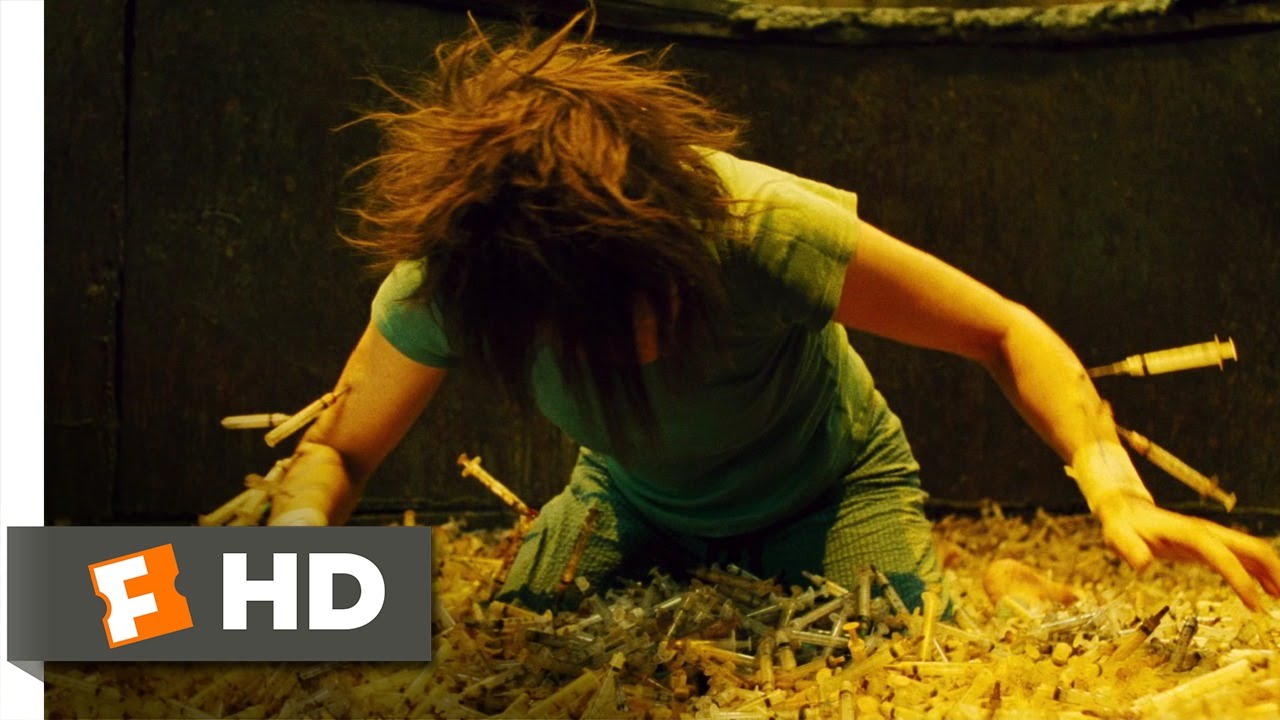
Saw II; AKA "The one with the needle pit."

Saw II serves to explain Jigsaw's motivations a little more. In addition to learning more about John Kramer's cancer and suicide attempt, we also learn that he hates the cops, especially corrupt cops.

*sigh* Here's how I feel about that:


Dude, so many cops die in the Jigsaw franchise, you'd think Antifa produced it. I kid, I kid. 

Anyway, so Donnie Wahlberg plays Detective Eric Matthews, a hotheaded corrupt cop who shows up at Jigsaw's headquarters only to find out that his son, Daniel is among the killer's latest victims: a video feed on a bunch of TVs in Jigsaw's workshop shows that eight people are locked inside an abandoned building. A nerve gas is slowly being released into the building, which will kill everyone within two hours. There are a bunch of vials of antidote locked throughout the house and the players must to work together and face some gruesome challenges in order to retrieve them.

The eight strangers know that they all have something in common...but what is it? Turns out, Detective Matthews planted false evidence on seven of them to get them convicted of various crimes...and of course the eighth person is Matthews' son. Yikes. 

As the eight strangers face their trials, Matthews faces a test of his own: Jigsaw simply wants to talk to him. He tells Matthews that if he talks with him for two hours, his son will be found "in a safe and secure location". Can Matthews sit and talk with this cancer-ridden old man without beating him to a pulp in order to save his son? Well, he's played by Donnie Wahlberg, so what do you think? 

Saw II is another escape room type movie (only it's an escape house, in this case) and is not as tight than the first film. There are more characters and less character development. I literally cared about no one in this movie. The movie is kind of one big build up to the revelation that Amanda Young is actually working with Jigsaw as his apprentice and accomplice, which sets the stage for the next movie. But as a movie itself, it's a whole lotta nothing.
I'll also point out that it was during this film that I noticed that the end of each Saw movie does this goofy thing where the music ramps up (and the music is reminiscent of that part in "Live and Let Die" where it starts going dun dun dun/dun dun dun/dun dun [fuck it: 00.49-01.00 in the song]) and there are all these rapid cuts with Jigsaw's voiceover explaining the moral of the story and all the clues the detectives missed. It's the equivalent of explaining why a joke is funny after you tell it. EVERY SAW MOVIE ENDS THIS WAY. I guess the filmmakers must think their audience is too stupid to just see what happens and they have to do shit like call back to Jigsaw saying something cryptic and then reveal very explicitly what he was referring to. To be honest, it was kind of funny once I noticed it--very much an exclamation point on which to end each film. And the end credits are always set to metal music, so it's extra ~edgy~. 

In conclusion, Saw II is a decent enough horror film, but nothing special. And it's not nearly as gory as the following entries in the franchise. So if you like horror but hate gore, you're probably safe with the first two movies in the series. That needle pit tho. Damn. 

Grade: B

***

Saw III; AKA "The one with the pig vat."

Finally, a Saw with some character development! In this installment of the franchise, we learn a lot more about Amanda Young's fucked up relationship with John Kramer, which is basically Stockholm Syndrome on steroids.

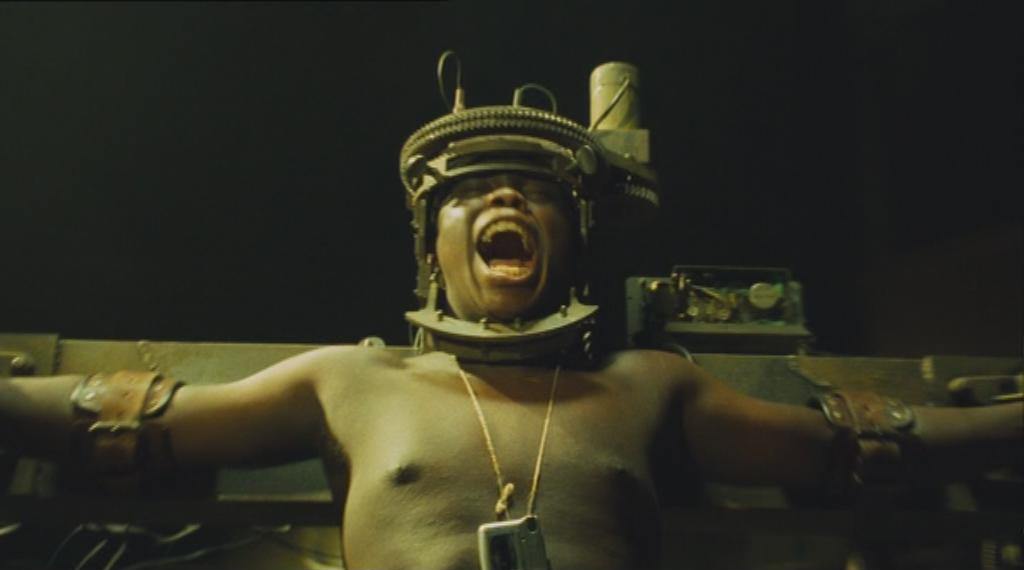
In the third film of the series, a man named Jeff Denlon (Angus Macfadyen) wakes up in an abandoned meatpacking plant. He is informed via cassette tape that he has been so busy mourning the death of his young son, who was hit by a drunk driver, that he has been neglecting his marriage, his daughter, and his life. And you know how Jigsaw feels about people taking their lives for granted! Jeff must complete a series of tests in order to escape--and they all involve deciding whether or not to help the people involved in his son's death. Jeff doesn't have to help them, but he's being given a chance to forgive. He must save a woman who was the only witness to his son's death (and refused to testify in court) from freezing to death; then he has to help the judge who let the drunk driver off with a light sentence get out of a vat which is rapidly filling with pig guts; and finally he must help free the very man who killed his child--the man is strapped to a machine that will, one-by-one, twist his limbs all the way around and finally twist his neck around, killing him.

This is the first Saw movie that contained some truly sickening torture. Most folks will remember the pig vat trap as the most memorable scene from this movie, but it's Timothy Young on the rack that had me watching through my fingers--the guy's leg bones splinter out of his leg when the rack twists his limbs. Y'all, I couldn't. THE CRACKING NOISE THEY MADE. I watched a YouTube video about the Saw movies and the guy said that this is the movie that gave Saw its reputation as torture porn, and I have to agree. In addition to the grisly and disgusting traps, this movie also ramps up the emotional pain by forcing Jeff to burn his dead son's stuffed animals in order to retrieve a key to save the judge's life. Come on, that's just cruel. And in the end, Jeff is literally unable to save the man who killed his son--not because he doesn't want to, but because he can't figure out how to stop the machine. He ends up hugging the man as he is dying and saying "I can't stop it, I can't stop it." SAW. WHY DID YOU HAVE TO DO ME DIRTY LIKE THIS?? I thought this series was going to be some light-hearted torture and it is actually making me tear up.
Meanwhile, Jeff's wife, Lynn, is also kidnapped. Lynn is a celebrated surgeon and is forced to keep John Kramer alive or a collar around her neck will explode, killing her. She is forced to perform a damn brain surgery on John and she fucking does it and he lives! But it doesn't matter because that bitch Amanda Young gets so jealous of John's interactions with Lynn, that she shoots her anyway! 

Basically, Saw III is Titus Andronicus: it's full of a bunch of bloody mayhem and then everyone dies. Yes, I'm saying that Saw III is ~literally~ Shakespeare. But seriously, everyone dies. Jeff dies, Lynn dies, Amanda dies, John Kramer dies, and all the other people in Jeff's game die. And also, this is my favorite Saw entry yet--the stakes are higher, the characters are more interesting, and the acting is not terrible. You could just tell that the filmmakers enjoyed making this one. It's sick, it's disgusting, but unlike the other Saw movies, you actually feel something. 

Grade: B+

***

Saw IV; AKA "The one no one can remember."

Since John Kramer dies in Saw III, Saw IV is the movie where it was clear the producers or whoever is in charge just decided "shit, let's keep churning 'em out as long as they're making money!" There was really no point in keeping the franchise going other than to make money. But money talks and so here we are.

Ok, so Jigsaw is dead, right? The movie opens with his autopsy. However, another game is afoot. The victim this time is Officer Daniel Rigg (Lyriq Bent), a classic "good cop" whose biggest problem is that he wants to save everyone. In fact, that is what his test is all about. He is led through a series of situations in which he is instructed NOT to help people, or there will be consequences. He learns this the hard way when he immediately saves the first victim from being scalped, only for her to turn around and try to kill him. Why? Well the woman he is saving is actually a sex trafficker of young girls and the room she is trapped in is filled with evidence. So Rigg is told NOT to help her, and she is (separately) told that if he succeeds in saving her, she needs to kill him or she will be convicted of her crimes. 

Slam pig!

The rest of the games are similar--Rigg is instructed to bind a rapist to a bed where he, the rapist, must choose between gouging his own eyes out, or having his limbs ripped from his body. Rigg is also instructed to give a key to a woman who is bound to her abusive husband and impaled with arrows. This is actually a compelling trap: the arrows pierce the husband all through major arteries, but pierce not-fatal areas of the wife's body. So if the wife pulls the arrows out of her body, she will survive and hubby will die. That fact that she is decides to live by killing her abusive husband is what makes this a genuinely good Jigsaw trap because it rewards an innocent person and kills a bad person. I mean, the one where the rapist has to gouge his eyes out is pretty cool too.

The final test tells Rigg NOT to open a door before a timer runs out. Well, wouldn't you know it, but the guy opens the door, resulting in the death of none other than Detective Eric Matthews from Saw II, who has been a prisoner of Jigsaw in the interim. So Rigg fails his game and dies...and it is revealed that another detective--Detective Mark Hoffman (Costas Mandylor) was working with Jigsaw all along. Yup, Saw IV sets up the next three movies with this reveal. Because John Kramer and Amanda Young are dead, so someone's gotta keep creating these torture devices. Hey, this reverse bear trap isn't going to blow someone's jaw open by itself! 

Oh, I have to note that in this movie we are introduced to John Kramer's ex-wife, Jill Tuck, who plays a large role in this and future Saw films. We find out that at one point, Jill was heavily pregnant with a son and a drug addict at Jill's clinic, which she was the director of, accidentally caused her to miscarry by shoving a door against her in an attempt to rob the clinic. This explains John Kramer's anger at addicts and it's also super creepy because... Jigsaw might have been a daddy?? Ewwww. Oh, and Jill says "I think he always blamed me for Gideon's [the son's] death." Um, what? He blamed his pregnant wife for miscarrying even though it was not her fault? Well, I guess that's par for the course for a narcissistic psychopath like John Kramer. I'm curious if the filmmakers thought this backstory would humanize John but instead it made me hate him even more.

This entry in the Saw franchise was fine. I liked Rigg as a character and the traps were interesting. It's not the best, it's not the worst. Moving on!

Grade: B

***

Saw V, AKA "The boring one."

This was the first Saw movie I was bored while watching. Most of the plot revolves around rejiggering the over-arching franchise timeline to cram Detective Mark Hoffman into the previous stories as Jigsaw's first accomplice. The film contains a number of flashbacks showing that Hoffman was working with John Kramer from the very beginning, even pre-dating Amanda Young. They kind of have to do this to explain certain Jigsaw killings that couldn't have been set up by Amanda and John alone since Amanda is a petite woman and John is literally bedridden with cancer. Basically, John is the brains and Mark is the brawn. Amanda is just annoying.

There is a game in this movie and it's pretty boring: five strangers (who, like the strangers in Saw II, are all have something in common) are put through a series of tests. They are explicitly told at the beginning of the game that they are all selfish people who only look out for number one, and they should go against their instincts to win the game. Ok, how do you interpret that? I interpret it as "oh, we're all selfish and we need to do the opposite so I guess he's saying we need to work together." But these geniuses immediately default to trying to save themselves--even going so far as to actively kill each other to up their chances of survival. It's not until the last test, which involves the two remaining people having to cut their arms and fill up a jar with blood to get out of a room before a bomb goes off. If they had all survived, each person would only need to give a little blood. But since two people are left, they basically have to cut their entire arms off to survive. Jigsaw is sometimes a little too on the nose.

This was a very boring and mediocre Saw movie. The traps were meh and so much time was spent trying to explain how Mark Hoffman was involved in earlier Jigsaw killings. I was mostly playing on my phone and doing household chores while watching it, and I have to say that I was not looking forward to the next installment...however, as you will see, I was pleasantly surprised by Saw VI. 

Grade: C

***

Saw VI, AKA "The one with the gun carousel." 

The weird morality of Saw continues with the latest victim at the center of Jigsaw's posthumous game being a callous and crooked insurance executive. For anyone keeping count, we know that Jigsaw:

  • Hated corrupt cops
  • Thought that people with drug addictions and/or suicidal ideation should be tortured into "cherishing their lives"
  • Partially blamed his wife for her own miscarriage (which wasn't her fault at all)
  • Apparently also hated predatory loan agents and insurance companies 
The serial killer Jigsaw has the nuanced understanding of ethics and progressive values a 19 year old white male philosophy major would have. In other words, he think he has all the answers, even though he refuses to see the world through any frame of reference other than his own. Motherfucker is DEAD and still trying to play God!

William Easton, the insurance executive who smirks when giving folks the news that their health issue isn't covered due to a barely related pre-existing condition, is kidnapped and put through a series of tests that, sadly, involve other and more innocent people. For example, in order to survive the first test, Easton simply needs to hold his breath longer than the janitor from his company, who is a lifelong smoker despite having high blood pressure. THE FUCKING JANITOR!!! I guess this blue collar man who cleans up after rich assholes like Easton deserves to be punished because he smokes! You know what, I'm glad Jigsaw's wife miscarried. This guy should NOT be a father. Can you imagine having this self-righteous dick as your dad!? 

Ok, ok, I get it...it's a horror movies and horror movies aren't always fair. That's what's horrific about them. But for a franchise that incorporates ethics as often and consistently as the Saw franchise does, you'd think they'd be a little less random about it and actually reward good/innocent people while punishing bad/guilty people. But nope, it's really just a game of Russian roulette when it comes to Jigsaw's games.

Rant aside, Saw VI is a definite improvement upon the last entry in the series, which was boring as hell. William Easton, played by character actor Peter Outerbridge, is actually a fairly interesting and sympathetic character. Even though he's kind of a slick douchebag, you can tell he actually believes in his own bullshit and isn't necessarily screwing people over just for fun. Throughout his tests, he seems to feel genuine pain when some of the colleagues who are relying on him for help don't survive. Easton may be an asshole, but he's not a sociopath (unlike Jigsaw, see rant above). The Saw movies work a lot better when the characters are relatable. Given that over the course of all these movies, we're seeing dozens of deaths on screen, it's easy to let one's eyes--and heart--glaze over. But horror movies are much more effective when we actually give a shit about the people being slaughtered. 

In addition, Saw VI contains two of the most entertaining scenes in the entire franchise: the gun carousel scene, where Easton has to choose two of his employees out of six to live, and we get to see some sexist preppy guy get his chest blown in, which was fun. The other scene is a procedural police scene where they unscramble a cassette tape and the guy whose voice is on in--Detective Mark Hoffman, aka Jigsaw's successor--is literally in the room as they realize it's his voice on the tape. 

I wouldn't have thought it going into the movie, but Saw VI turned out to be my favorite film in the series!

Grade: B+

***

Saw VII, AKA "The final chapter...or is it?!"

Can we have more movies where Nazi skinheads are killed in extremely gruesome ways? There's a scene in Saw VII where a band of skinheads all die in a trap created by Jigsaw's successor, Mark Hoffman. Does the scene serve the plot at all? No, not really. But Saw VII isn't exactly a plot-driven film...it's simply another in a long line of movies that dares to ask the question: how many ways CAN you dismember, flay, or otherwise destroy the human body? 

Saw VII, aka Saw 3D, aka Saw: The Final Chapter claims to be, well, the final chapter. As you can see below...it is not. The film does do a couple things that feel "final-y", such as bringing back Dr. Lawrence Gordon so that he can kill off Mark Hoffman (although we never see Hoffman's dead body, so in Hollywood that means he might not really be dead). But the main plot of the film is just another game, like all of the films that came before it. As long as the Saw filmmakers can keep coming up with grisly torture traps, they will be able to keep the franchise going forever. 

The victim of the latest game is Bobby Dagen (Sean Patrick Flannery), a man who wrote an inspiring memoir about surviving one of Jigsaw's traps. The only problem is...it's all bullshit. He was never a Jigsaw victim. Until now. Bobby is kidnapped, along with his wife and his handlers (his publicist, lawyer, and best friend). Bobby has to go through a series of tests to save each of these individuals and wouldn't you know it, he fails every single one. This is yet another game that makes me question Jigsaw's sense of morality because Bobby's wife doesn't even know he made the survival story up (unlike the publicist, lawyer, and friend who all knew Bobby was lying). She truly was an innocent victim--not just of Jigsaw, but of Bobby. So, once again, Jigsaw (in this case, Hoffman, not Kramer) punishes people who literally did nothing wrong in order to further torment the actual wrongdoer. And unlike the white supremacists that Hoffman punishes in the earlier sequence I mentioned above, Bobby wasn't really that bad of a guy. Yes, he lied and profited off that lie, but that's a small sin compared to some of the shit Jigsaw's other victims have done (and compared to the sins of Jigsaw himself. I'm honesty pissed this series didn't end with Jigsaw being put through one of his own games).

Saw VII is not the worst in the series, but it's pretty low on the list. It's mildly entertaining, although the acting is noticeably worse than in previous entries. At this point, I'm kind of ready for this experiment in watching all the Saw films to be over. Not because I can't handle the gore, but because they're getting very repetitive. 

Grade: B-

***

Jigsaw, AKA, "Why?" 

I went into Jigsaw thinking it was going to be Jigsaw's origin story. However, the film begins 10 years after John Kramer's death. A few dead bodies are found with Jigsaw's signature puzzle piece carved in their flesh--is it a copycat or is the psychotic serial killer somehow killing from beyond the grave?

We cut back and forth between two pathologists examining the bodies and a classic Jigsaw game: 5 strangers wake up with buckets on their heads and are told that they must confess their sins in order to survive. For the first game, they are asked to give a sacrifice of blood and are dragged via chains attached to their bucket heads towards spinning chainsaws. All but one survive.

Throughout the series of tests, it is revealed that each individual either killed someone or made a selfish decision that led to someone else's death. Unlike many of the other Saw movies, the people in this game arguably deserve to die. That's a nice consolation given that this is a fairly boring Saw film. Hell, even the traps are less interesting and vicious than usual. After watching some massively effed up shit, Jigsaw feels like a Disney movie in comparison.

This film adds exactly nothing to the Saw universe and it really feels like Groundhog Day at this point. Clearly, the series has devolved into a cash grab. It's not as boring as Saw V, which is still my least favorite Saw movie, but it's definitely pretty low on the totem poll. Especially since there is a needlessly complicated subplot that tries to confuse the viewer by futzing with the Saw timeline. TL;DR: the game we're watching actually happened ten years prior, when Jigsaw was still alive. The fresh bodies that are stacking up in present day is a recreation of the same game in a plot to frame a detective as a Jigsaw copycat. It turns out that one of the pathologists, Logan, is the one who framed the detective, because the detective allowed a criminal to go free who ended up murdering Logan's wife.

Confused yet? Because I was. And I'm ready to watch that last (for now) Saw film.

Grade: C

***

Spiral: From the Book of Saw, AKA "The fancy one."

I call this the fancy one for a couple reasons. First, it has the most famous cast. While Chris Rock takes the lead as Detective Zeke Banks, he's not the most famous guy in the movie. That honor would go to Mr. Samuel L. Jackson, as Zeke's father, Marcus Banks, a retired chief of police. In addition, Max Minghella and Marisol Nichols round out the cast, playing a rookie detective and police Captain, respectively. 

Secondly, the films's title is literally "From the Book of Saw". What the fuck is this, the Bible? The book of Saw? I just think it's cute that the producers, or whoever is in charge of movie title decisions, decided to fancy up this torture porn with a title that sounds like an award-winning film at Cannes.

Thirdly, instead of metal music, this Saw movie is set to rap. I don't know why, but rap just feels ~classier~ to me than metal. It also feels more modern. It's like the filmmakers made a conscious decision to drag this franchise out of the aughts and into the roaring 2020s. Not that we really needed more Saw films, but I guess as long as people are still paying to watch them, they'll keep making them. This is also not to say that Spiral is a good movie, because it really isn't. The dialogue is especially heinous, made worse by Chris Rock's emphatic manner of speaking. There's one scene where he's looking at a bunch of crime scene evidence and he says "I've been looking at this shit for five hours! I don't even look at PORN that long!" Um, ok, was the script written by a 7th grader? Anyway, let's get to the plot.

When a corrupt detective is found smashed to smithereens after being hit by a subway train, clues are found near the crime scene and on the bloody remains. Namely, a USB drive that says "play me". The distorted voice we hear that informs us the that speaker is going to "reform the metro police" is clearly not Jigsaw's, but various aspects of the crime scene lead Det. Banks and his new rookie partner, Det. Schenk to believe that there is (yet another) Jigsaw copycat on the loose. When more detectives on the force start ending up in Saw traps, it's clear that whoever the killer is, he is punishing members of the force for their role in covering up and allowing corruption.

Spiral contains some classic Saw tropes: corrupt law enforcement paying for their sins, a huge twist at the end (in this case, it's that the rookie, Schenk, was the copycat killer all along), and traps that force people to harm themselves in order to survive. Still, it's clear that the filmmakers are trying to distinguish this film from earlier Saw films in an attempt to reboot the entire franchise. The ending is left WIDE open for a sequel...to the point where is actually feels a but like a cliffhanger. So I guess we're going to be seeing more "chapters" from this so-called Book of Saw. Yayyyyy. 

Grade: C

***

Overall thoughts, final ranking, and franchise grade

Wow, the Saw franchise really upended my expectations in a couple ways. First of all, the movies weren't nearly as bad as I was led to believe. According to Rotten Tomatoes, the Saw movies range from a high of 51% (the first Saw) to a low of 10% (Saw VII). While none of the movies were Citizen Kane, they mostly were not that bad. And yes, I realize that Rotten Tomatoes is rating them based on the critics' opinions, but I tend to pay attention to what movie critics are saying when I make the choice of what to watch. If anything, going through the Saw gauntlet might make me consider watching more movies that are poorly rated by the critics.

Another expectation that was upended was how gory--or not gory--the movies are. The first two aren't really any worse than any other horror movie I've seen. Saw III is where it starts to get gnarly and, I guess if I'm looking at this from the perspective of a novice horror film watcher, yeah they're pretty gross. It really does go to show that one can become desensitized to movie violence. So I think the expectations I upended here were my own expectations of how much gore I could handle. There were a few times I watching through my fingers, but overall I handled the Saw films fine. 

The other thing that surprised me was how all over the place Jigsaw's moral and ethical framework is. Yeah, I get it, he's the bad guy. But the movies have a way of presenting him as at least somewhat understandable and sympathetic. I don't know whether the filmmakers wanted us to root for John Kramer or not, but what I took away from the films is that he is a narcissistic psychopath:

1. He thinks he has a right to play God with the lives of others, and that his morals are the correct ones.
2. The difficult things he has gone through in life (the loss of a child, cancer, a suicide attempt) do not increase his empathy for others, but rather decrease it. 
3. His standards for his victims are not consistent: some people are put in traps that are impossible to win while others face relatively easy challenges. Sometimes murderers are put in easy traps while drug users are put in impossible traps. Often, innocent people are punished and even killed to cause emotional anguish for the actual target of the game. YET! Jigsaw is always making a point about what "a life is worth". So this motherfucker is willing to kill innocent people to hurt his targets, but also claims to have a greater understanding of the value of human life? C'mon. He has the same mentality of a person who kills abortion doctors in order to stop them from "murdering babies". 

What I think is most disappointing is that if the filmmakers had figured out a consistent--and fair--sense of morality for the character of Jigsaw, the films would have been better. As we can see with the popularity of shows like The Twilight Zone, audiences enjoy watching bad people learn lessons dished out in poetically just ways. Alternatively, if Jigsaw was just presented as a madman with no rhyme or reason to his kills, that would have been acceptable as well. It's this wishy-washy middle ground that is the problem. Unlike so many film villains ranging from charming psychopath (Hannibal Lecter) to righteously angry murderer (Kilmonger), to fabulous bitch (Ursula), John Kramer just isn't a good villain. He's not charming enough to be likable, but he's not righteous enough to be empathetic. He is an uptight hypocrite who happens to be an engineering whiz.

So, I'm going to give the series a B- grade. It's good, but not that good. It's too entertaining to get a C grade, but not good enough to get an A or even a B+. It's gross, outrageous, shallow entertainment that may give you a thrill but it's certainly not a franchise I see myself revisiting.

Ranking of the films from best to worst:

Saw VI--B+
Saw III--B+
Saw--B
Saw II and Saw IV (tie)--B
SawVII--B-
Jigsaw and Spiral (tie)--C
Saw V--C

Franchise Grade: B-