Tuesday, June 21, 2011

Sweet and Short

Movies: Midnight in Paris, My Brilliant Career

Midnight in Paris

Woody Allen's latest comedy is as light and sweet as...I don't know...zinfandel.

Ok, maybe that's not the most ideal analogy, but seriously, Midnight in Paris is a real treat of a film. It's funny, feel-good, and filled with amusing celebrity cameos. Owen Wilson plays Gil Pender--a Hollywood screenwriter who dreams of writing a novel instead of churning out awful scripts for a paycheck. His selfish, label-conscious fiance, Inez (Rachel McAdams), has plans for the two of them to move to Malibu and live a life of crass luxury. When the two vacation in Paris, Gil finds himself romanticizing the City of Lights during the Jazz Age and thinking about how life would have been so much better and exciting if he had just been born 90 years earlier. One night, as Gil walks the streets of Paris, alone and tipsy, a 1920's style car pulls up and some  raucous partygoers beckon him inside. Like Cinderella's pumpkin, this car takes Gil to a party where he meets...Ernest Hemingway...and Zelda and Scott Fitzgerald...and there's Cole Porter at the piano! Gil gets the chance to live his fantasy--and even have Gertrude Stein give him tips on his novel. But when Gil meets a beautiful woman (Marion Cotillard) and begins to fall for her, will he decide to leave the present and live in the past for good?


Allen seems to have made two types of movies in the past couple decades: awful comedies (Scoop, Whatever Works) and good dramas (Match Point, Vicky Christina Barcelona). Midnight in Paris manages to hit the sweet spot between two extremes: it is a light, breezy comedy that is actually touching with a nice, unforced lesson at its center. With cameos by Adrien Brody as Salvador Dali and Kathy Bates as Gertrude Stein (among many others), the movie will be full of surprises for literary viewers; and the light sarcasm will remind Allen fans of his earlier "funny" movies, such as Bananas and Sleeper. Pretty much a win-win for everyone.

4 out of 5 stars

***

My Brilliant Career

Anyone looking for a good flick with feminist bona fides will enjoy My Brilliant Career. Judy Davis plays Sybylla Melvyn, a young woman in Australia at the turn of the 20th century. Sybylla dreams of having a career in art: literature...opera...she can't decide! However, her impoverished family has other plans. They encourage her to find a wealthy suitor and get married...or to prepare for a life of drudgery as a governess. Sybylla has no qualms about turning down the proposal of a boring gentleman who tells Syb, "You can't do better than me!", but when she falls in love with a rich man (Sam Neil) who cares deeply for her and respects her fun and curious nature, the decision between marriage and career is much more difficult.


This movie reminded me that there was a time not that long ago when women really did have to choose between marriage and a life of independence. Marriage nearly always meant children--lots of them--and far less time to focus on one's own interests and ambitions. Although the film doesn't dwell on sex, it makes you realize how truly revolutionary the Pill (and other forms of birth control) really were for women's lives. And although we certainly don't live in a gender equal paradise nowadays, My Brilliant Career made me realize how lucky I am to be able to have marriage, a career, or both, if I so choose.

4 out of 5 stars

Monday, June 20, 2011

In Dreams

Movies: Eyes Wide Shut

Warning: sexy spoilers.

Stanley Kubrick's final film, Eyes Wide Shut, holds a special place in my heart. It was a movie I was expressly forbidden to see. My parents saw it at the theatre when it came out in 1999 (I was about 13 at the time) and when I asked if I could see it when it came out on video, my mom said "No way".

Little did they know that I watched nearly the entire film on one of our secret "scrambled" TV channels...bwahaha!


But watching Eyes Wide Shut on a scrambled channel is definitely not the way it was intended to be viewed, and I finally sat down and watched it for the first time in my adult life last week. Film buffs know that Kubrick took over a year to make this movie and died very shortly after it was completed. The film was widely criticized and the late Kubrick mocked for his reclusiveness and obsessiveness. Critics said the film revealed how out of touch he was with the modern world, and that it was laughably unerotic, clinical, and boring. I can see why many people were disappointed by the film. Because of Kubrick's secretiveness, the length of the shoot, and the high profile married stars (this was long before Tom Cruise did the couch-jumping thing on Oprah), there was an intense amount of pressure on Eyes Wide Shut to live up to the fevered fantasies of movie critics and cinephiles everywhere. Before it was even released, people were salivating over it and saying it was going to be the "sexiest film ever made". Well, I can tell you that it is certainly not the sexiest film ever made. And I don't think that was Kubrick's intention at all.

The complaints lobbed at the film are legitimate: First, It is very clinical. The dialogue is stilted and the interactions between the characters are often unnatural. The scene where Bill and Alice, the married couple at the center of the film, smoke pot and get into a fight over whether or not women, like men, feel extramarital sexual desire, struck me as bizarre. Bill and Alice have been married for 10 years and have an active sex life. And yet they behave in this scene as if they've never had an honest conversation about sex. Maybe that's the point? Even though Alice is the one acting aggressive and crass in this scene, it's Bill who comes off looking like a fool: he honestly never believed his wife would fantasize about another man. When she reveals that she does, in fact, have such thoughts, Bill is shocked and dismayed. And it is this conversation that propels Bill into his little sexual odyssey around New York City and thus propels the entire film. I thought it was odd that the basis of the entire movie is a revelation that would strike most people I know as mind-bogglingly obvious. Women--married women--have sexual thoughts that exist on a spectrum outside of their marriage. Big whoop! No need to go to an orgy over it...

...but, ah! Bill does go to an orgy over it! And a prostitute as well. And this is where another so-called problem of the film arises: the fact that it promises much eroticism and delivers little. But I think that with this complaint the critics missed the point. I don't think Kubrick set out to make a film about a man's sexual adventures, but rather, a film about a man's sexual humiliation. And he succeeded. Bill, reeling from Alice's naughty revelation that she once thought about sex with another man (key word here is "thought". She didn't actually sleep with the other guy), finds himself wandering the streets of New York City at night and becoming entangled in a series of sexual misadventures. Yet, despite his apparent desire to taste strange fruit, he never actually has sex. Bill is, for the most part, a passive character. He finds himself on the receiving end of the attentions of women: a distraught woman kisses him; a prostitute approaches and propositions him; a young girl flirts with him...he initiates none of this, and merely accepts it when it happens. It is only when he hears from a friend about an elite group of wealthy New Yorkers who meet in a mansion for group sex that Bill takes action and decides to worm his way into this secretive gathering. But it's all for naught: once Bill makes it into the mansion and observes the festivities (again, he is passive and merely watches--he does not participate in the sex), he is summoned before the masked orgy participants and forced to remove his mask in front of them. They know he is an outsider and he is publicly humiliated for his trespassing.

Not only is Eyes Wide Shut not erotic in a very literal way (the orgy scene is ridiculous and, in any case, you don't see much. And I was watching the unedited version), it is anti-erotic conceptually. It is a movie where a man chooses not (or perhaps fails depending on your viewpoint) to perform sexually. It is a movie about not committing adultery. In fact, it is a film about humiliation and emasculation. And I think Kubrick was a genius in casting Cruise for this part: a classic leading man and a romantic heartthrob (again, pre-couch jumping when he was still relevant) in a role where he is humiliated by his wife and by a giant crowd of masked orgy-goers. The bigger they are, the harder they fall. Nicely done, Mr. Kubrick.

So, I've taken a very circuitous route to make my point. Simply, I believe that Eyes Wide Shut is a misunderstood work of near-genius. It is a beautiful film. The saturated colors, soft lighting, and lovely musical score make it look and sound and feel like art. I don't consider the film to be Kubrick's best*, but it definitely has his name written all over it. And since I dig Kubrick's style and ideas generally, I enjoyed this one despite its flaws. I just wonder what the point of it all is. After Bill confesses his (non) adventures to his wife and asks what they should do, she says that they should be happy they survived their little adventures and be grateful that they are now "awake". Eyes Wide Shut is based on a novella titled "Dream Story", and I think that Alice's comment about being "awake" might be the moral (if there is one) to the story: everyone has dreams and fantasies, and when we try to live out these fantasies, they often do not play out as we hoped. So, while dreams and fantasies are not bad or immoral, reality is what we should focus on and be grateful for.

There's probably much more to Eyes Wide Shut than my quick and dirty interpretation, but that's the best I can do without watching it a second time. The movie is not perfect, but I was entranced by its beauty and intrigued by its ideas.

4.5 out of 5 stars

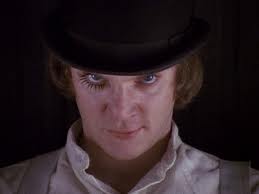
*Kubrick's best film, in my opinion, is A Clockwork Orange, which also has the special distinction of being one of two movies (the other is Perfume: The Story of a Murderer) that were so offensive to friends of mine that it was insinuated that I was a "bad person" for liking them. Little did these friends know that I secretly love it when movies I enjoy shock others. Bwahaha...

Am I messed up for having a crush on this guy?

You bet.

Thursday, June 16, 2011

Gorgeousness and Gorgeousity

Movies: Cave of Forgotten Dreams

Even when Werner Herzog is not at his best, the product is still pretty damn good. I went to the German director's latest documentary with sky-high expectations and, sadly, Cave of Forgotten Dreams did not quite reach the peaks of ecstasy that I have come to associate with Herzog's films. But that's not to say that Cave of Forgotten Dreams is not worth seeing. It is--as long as you see it in 3D and on the big screen. Otherwise, it's little more than an overly long Discovery Channel documentary.


Herzog is one of my favorite filmmakers, so I hold him to a high standard. His 1979 update of the vampire film Nosferatu and the 2007 documentary Encounters at the End of the World are my favorites. Both of these films are haunting in their beauty. Herzog's use of imagery, music, and long stretches of silence where the viewer just sort of lets the film wash over him or her appeal strongly to me. Herzog also has a tendency to focus on interesting, eccentric people--such as Timothy Treadwell in what is perhaps Herzog's best known film, Grizzly Man. Herzog is clearly a man fascinated by nature, beauty, and man's search for meaning. His movies aren't designed to entertain, but to allow us to see the world from a unique perspective.

This is the aim of Cave of Forgotten Dreams, a documentary about ancient cave paintings that were discovered in the Chauvet caves in France. These paintings are the oldest that have ever been discovered--and their technique and beauty is thrilling. To see their artistry and detail sent shivers down my spine because, to me, it shows that the humans who lived over 35,000 years ago when these paintings were made still had something in them that we recognize in ourselves today. I'm not saying that these prehistoric humans were artistes, but their paintings show that they also had that certain spark--a desire for expression and creation let's say--that separates us from the rest of the animal kingdom. We share a bond, reaching back millenia, with these cave men and women.

While a straightforward documentary would have sufficed, Herzog went an extra step and filmed this movie in 3D. I've only seen a handful of films in 3D (most of them animated), but this is the best use of the medium I've seen. I know it might sound obvious, but it makes you feel like you're right there, in the cave, mere inches away from the paintings. Herzog knew that we will never get access to these caves the way he and a few select others did. His choice to make the film in 3D seems very deliberate--a way to invite the audience in and tell them, "You may never get as close as I did, but I will make every effort for you to feel as close as possible to this art". And it works. The 3D puffs out the images so that you feel like you could run your hands against them.

That said, Cave of Forgotten Dreams is not perfect. For one thing, it is slow and even a bit snooze-inducing in some parts. The film felt much longer than 90 minutes, and there were times when I wanted Herzog to hurry up and make his point so I could go home.

The other problem I had was the ending of the film. Herzog has said in interviews that his films aim for "ecstatic truth"--that is, a level beyond actual reality that captures Truth (with a capital T) in a way that the basic facts never could. Herzog has used this excuse, or aim, or whatever you call it to justify falsifying facts in his previous documentaries. I respect his decisions as a filmmaker, but this whole false Truth is greater than true truth equation really only works when you don't know about it. If you're going to plant fake stuff in your documentaries in the name of art, please take care to hide the brushstrokes. In the last scene of Cave of Forgotten Dreams, Herzog pulls an obvious Herzogian move. He inserts a scene of "radioactive albino alligators" and discusses how they have evolved, or been affected by the modern world and its environment. He asks "are we the albino alligators, looking back on the men who did the cave paintings?" (I'm paraphrasing here). I think I sort of understand what he's trying to say--i.e. that we are products of our modern environment looking back into the past...or something. But the scene feels so out of place and disjointed that instead of ringing Ecstatically True, it just rings false. Plus, I bet those alligators aren't really radioactive. But that's Werner for you.


OMG. Are WE really the alligators? Or did I just blow your mind!?


4 out of 5 stars

Tuesday, June 7, 2011

Boring People in Love

Movies: No Strings Attached

In No Strings Attached two pretty people decide to have sex with each other but not fall in love. We, the audience, know that this arrangement is doomed to failure since Adam (Ashton Kutcher) has been and is still enamored by Emma (Natalie Portman). We know that he is only agreeing to this supremely silly arrangement because there is a chance he might win Emma's heart, in addition to her Lady Palace. Adam does not attempt to hide his feelings for Emma, and his method of wooing her is hardly subtle. When he finds out that she and her roommates are "on the same cycle", he comes over with cupcakes and a "period mix" CD. In the real world, this act of chivalry would come off as bizarre at best and stalkerish at worst (*how*, exactly, does he know the details of Emma and her roommates' reproductive cycles?)  In the world of No Strings Attached, it is a signal to the audience that Adam likes Emma for more than sex! He is happy to cuddle and bring her tea when she's on her period! Awww! But...we don't need this signal because we already know that Adam likes Emma as more than a sex friend. We already know the outcome, so why are we watching this?


It's not for the acting--that's for sure. I've seen Ashton Kutcher in That 70's Show and a few light-hearted comedies, such as Just Married, and I admit that the guy can be funny in a zany, exasperated way. But his performance in this film is completely lacking in anything that might resemble a human emotion. He kind of acts like he's on a low dose of Xanax throughout the film. And Natalie Portman is really out of her element here. Her performance in Black Swan was riveting and intense, and she was one of the few good things about Closer. But romantic comedies seem to really not be her thing. No Strings Attached is miscast. I think the movie would have been much better if the leads were played by, say, John Krasinski and Isla Fisher--two actors who are genuinely funny in addition to being attractive.

I also think No Strings Attached would have been funnier if it had been a little zanier--a little more screwball. If there had been more wacky misunderstandings or witty banter. This is supposed to be a romantic comedy where attractive young people bang just for funsies...yet, there is something so sterile and unfunny about the whole situation. Where is the joy? Where is the eroticism? This film makes sex look horrendously boring. In fact, I would say that this film makes *life* look horrendously boring.

Luckily, No Strings Attached may get a do-over of sorts. On July 22nd, the movie Friends with Benefits, starring Justin Timberlake and Mila Kunis is coming out. It sounds like it has nearly the same plot as No Strings Attached. Except it has genuinely funny and attractive actors (at least, I think so). In response to a bad kiss in No Strings Attached Adam shrugs and says "mulligans". Hopefully Friends with Benefits will serve as mulligans for its successor.

2 out of 5 stars

Monday, June 6, 2011

Hey, Hey, We're the Mutants!

Movies: X-Men: First Class

Some spoilers ahead.

I came to this movie with a completely blank slate. I've never read any of the X-Men comics and I haven't seen any of the previous X-Men movies. All I knew was that Professor X was in a wheelchair. Seriously. Yet I was not only able to follow the plot of X-Men: First Class, I also freaking loved it! I found it to be similar to The Dark Knight in terms of its combination of typical superhero action and underlying social message. It's not just about blowing stuff up.

X-Men: First Class opens in 1944 in a Polish ghetto/concentration camp. A young boy is separated from his parents, and as the Nazi guards hold him back, the metal of the barbed wire gates becomes twisted as the boy reaches out to his crying mother and father. This is young Erik Lehnsherr, later known as Magneto. His talent for attracting and manipulating metal is exploited by Sebastian Shaw (Kevin Bacon, who plays a great villain, both in this movie and the anti-superhero superhero movie Super) who discovers that Erik's talent is brought out by anger and fear.

Cut to England. We see young Charles Xavier roaming around his family's mansion in the middle of the night and coming upon someone who looks like his mother, but is actually a shape-shifting young girl, Raven. After the two share their abilities (Charles can read and influence others' minds), they have a "I thought I was the only one!" moment, and the boy adopts the young girl as a sister.

Years later, in the early 1960's, our young mutants are grown up and leading vastly different lives. Charles (played by James McAvoy) is a professor of genetics and a son of privilege. He has an incredibly benevolent attitude toward life. Erik (the astonishing Michael Fassbender), is bitter, angry, and driven by a desire for revenge--against Sebastian Shaw, specifically, and the whole of humankind, generally.

The movie revolves around the relationship between Charles and Erik. While they are brought together by similar goals (combating evil, helping the CIA), their outlooks could not be more different. X-Men fans know that the two men will become enemies over time, but it is fascinating to watch their friendship unfold, grow, and finally explode at the climax of the film. Charles tries to teach Erik how to use his power without anger, and succeeds in one intensely emotional scene where he taps into Erik's memory. But in the end, the pull of anger and hatred proves too strong, and Erik embraces his dark side.

Charles' attitude also seems a bit naive. He believes that humans will accept and work together with mutants. Having grown up in the lap of luxury, Charles does not understand pain and loss the way Erik does. I found my head agreeing with Erik's negative view of humankind, while my heart agreed with Charles. X-Men: First Class manages to take black and white themes (good vs. evil, hatred vs.love, revenge vs. forgiveness) and add shades of gray. We truly sympathize with Erik. When Erik is about to destroy American and Russian ships with their own missiles (after both sides fire with the intent of killing the mutants), Charles points out that there are innocent men on those ships who are "just following orders". This is exactly the wrong thing to say, since Erik experienced ghastly torture at the hands of Nazis who were also "just following orders". And as spiritually correct as Charles is (it is better to have mercy and turn the other cheek), Erik is also right! Since when is violence and evil justified in the name of following orders? Shouldn't such behavior be punished?

There are also a few other rather heavy-handed social messages in the film. Raven (aka Mystique) struggles with her body image since she must hide her mutation in order to look "normal". Her guardian, Charles, doesn't understand because his mutation--telepathy--doesn't manifest itself in his appearance. When she meets Hank McCoy (Beast), she finds that he, too, is struggling with his "ugly" mutation: giant monkey feet. Hank works on a "cure" that will not affect a mutant's abilities, but will make them look "normal". The message is brought home when Hank attempts to take the cure, only to find that it actually maximizes the mutation. Instead of just having weird feet, Hank is now fully transformed in a cross between the Beast from Beauty and the Beast and the Cookie Monster. Raven, on the other hand, is rewarded for accepting herself as is by getting to sleep with Michael Fassbender. Or, as least, that's what's implied.

Despite the occasional lack of subtlety, and the occasional bad acting job thrown in among many excellent performances (January Jones as Emma Frost just stands there and says her lines without any inflection or facial movements), X-Men: First Class is a solid film. It's as fun as it is emotionally resonant. It's both brain candy and eye candy (see: Erik using his powers to pull a submarine out of the water while clinging to a fighter jet. Sweeeet). Many superhero films come out every year, but few really excel. X-Men: First Class graduates summa cum laude in my book.

Also: Charles + Erik = hott.

4.5 out of 5 stars

Thursday, June 2, 2011

Short Takes

Movies: Helvetica, Mysterious Skin, The Fighter

Helvetica


Helvetica is a documentary on what could potentially be a very boring topic: typefaces (aka fonts). Yet the film proves to be interesting and entertaining in a "Hmm...I never knew that. Learning is fun!" sort of way. The documentary discusses the development of the helvetica typeface in the late 1950's--a time when typography and graphic design were evolving into what we would consider a modernistic style (think sleek, clean lines). Now, 50 years later, helvetica and similar typefaces are more prevalent than ever in graphic culture and show no signs of going away, despite some backlash against the ubiquity of the font. It's fascinating to think that typefaces surround us on a daily basis and subliminally influence us, yet most people never give them a single thought. 

3.5 out of 5 stars

***

Mysterious Skin


I've seen Gregg Araki's Mysterious Skin twice now, and while I was watching it the second time I was thinking "Why am I willingly putting myself through this again?" Not because Mysterious Skin is a bad film (it's actually an excellent film), but because it is about one of the most disturbing, difficult issues imaginable: child sexual abuse, and the devastating burden victims of abuse carry with them throughout their lives. In the film, two boys grow up in a small town. Brian (played as a teenager by Brady Corbett) is tormented by five hours of his life that went "missing" when he was eight years old. He becomes increasingly convinced that he was abducted by aliens during that evening he can't remember. Neil (Joseph Gordon-Levitt, in a mind-blowing performance), on the other hand, remembers quite clearly that he was the "favorite" of his baseball coach when he was eight, and that he spent a lot of time at Coach's house playing video games, eating sugary cereals, and playing other "games" Coach taught him. Neil grows up to be a hustler who specializes in servicing older men. He eventually moves to New York City and takes bigger and bigger sexual risks that almost destroy him.

Araki handles a nearly impossible subject with sensitivity and grace. He never excuses the coach's monstrous abuse, but he doesn't make the coach into a cartoonish villain either. And, in the case of Neil, it is made very clear that Neil knew he was gay from a young age--the abuse didn't "make him gay", although it certainly affected him in dangerous and awful ways. The final scene of the movie, in which Neil takes Brian back to Coach's old house and describes to him, in graphic detail, what happened during those "missing" hours is beyond heartbreaking. Corbett and Gordon-Levitt show us, with their faces and mannerisms, how abuse can have vastly different outcomes on different people, and how the memory of abuse can be devastating, transformative, and healing all at the same time.

Mysterious Skin is not a film for everyone. It is extremely difficult to watch, but it is sensitive, well-made, and important.

5 out of 5 stars

***

The Fighter


Nominated for Best Picture this past year, I expected to like The Fighter a lot more than I did. The film is based on the lives of Mickey Ward and his half-brother Dickey Eklund, and their large and loud family. Mickey (Mark Wahlberg) is an up-and-coming boxer in Lowell, Massachusetts. He is trained by Dickey (Christian Bale), aka "The Pride of Lowell", who once knocked out Sugar Ray Leonard (or did Leonard just trip?). Dickey's glory days are far behind him and he spends most of his time smoking crack with his burnout friends. Their mother, Alice Ward (Melissa Leo), seems to favor Dickey, and continues to kid herself that Dickey is due for a comeback any day, despite the fact that Dickey is around 40 years old and is--whoops!--an emaciated crack addict. The story is not so much about boxing as it is about Mickey learning to not be codependent on his family--a family that claims to have his best interests at heart, but actually hold him back from reaching his potential. Mickey, who comes across as strangely passive in the film, is encouraged by his father and his girlfriend (Amy Adams). He eventually breaks free of his deadbeat brother, controlling and manipulative mother, and abrasive sisters (he has seven of them. My dad called them a "Greek Chorus").

The Fighter is an interesting film on many levels. I like that it is not a typical sports film, and that it's really more about screwed up family dynamics than anything else, but I found the portrayals of many of the characters to be cartoonish and over the top--especially Bale as Dickey and Leo as Alice Ward (ironically, Bale and Leo won Oscars for their performances). Maybe that's how the Ward family really was in real life, but the way they are portrayed in the film seemed to be verging on parody. The second half of the film (once Dickey is in prison and Mickey begins his boxing career in earnest) is measurably better than the first half.

3 out of 5 stars


Wednesday, June 1, 2011

Her Name Was Laura Palmer

Movies: Twin Peaks: Fire Walk With Me

Spoilers, baby.

I'm sure David Lynch had noble intentions when he set out to make a feature length film "prequel" to his haunting cult TV show Twin Peaks. And I'm sure the audience came to the film expecting it to answer some of the questions left unanswered by the abrupt and bizarre finale. But the film Twin Peaks: Fire Walk With Me struck me as unnecessary at best and exploitative at worst. According to Wikipedia, Lynch originally filmed five hours worth of footage and eventually trimmed it down to two hours and 15 minutes for theatrical release. Perhaps those extra 2 hours and 45 minutes contained a larger back story and answered more questions about the supernatural elements of Twin Peaks, but the film as is just appears to be an excuse to show what happened to Laura Palmer the night she died, as well as the fear and torment she underwent in the weeks leading up to her death. And it ain't pretty. In fact, it feels a little like snuff to me. I really didn't need to watch Laura and Ronette Pulaski scream and cry for 20 minutes while they are terrorized, sexually assaulted, and finally murdered (well, Laura is murdered and Ronette escapes). It's not really that explicit, but it does seem unnecessary.

That's not to the say that the tone of the film is any different from the tone of the TV show. Twin Peaks the show had terrifying moments and dark glimpses into the human (and other-than-human) soul. The show had violence that would seem lurid and exploitative if taken out of context. But the key difference between Twin Peaks the movie and Twin Peaks the show is that the show actually had context. The movie does not. Thus, scenes and descriptions of violence and abuse in the show serve to move the plot forward and are part of a larger whole. Similar scenes in the movie just seem...gross.

In addition, Lynch trots out some of our favorite characters. But why? Special Agent Dale Cooper, who was the heart and soul of the TV show, is here for a bit, but his presence has nothing to do with the rest of the movie. In fact, it seems to raise more questions than it answers. New characters are introduced and then dismissed. Odds and ends from the show are brought into the film and then never explained (example: creepy old lady with the grandson who could make creamed corn magically disappear are in the movie and give Laura a weird picture to hang on her wall. If haven't seen the show, don't ask). 


Twin Peaks: Fire Walk With Me manages to be both boring and unpleasant. If you're a Twins Peaks completist, then it might be worth a watch. Otherwise, you won't miss out on much if you stick with the show.

2 out of 5 stars